Ang Redline Steaer Malware mao ang panguna nga gigikanan sa mga kredensyal sa duha ka dagkong mga merkado
Sumala sa Insight Group mga analista, the vast majority of stolen credentials sold on two large underground darknet marketplaces are collected using the RedLine Stealer malware.
RedLine Stealer was first discovered in March 2020. The malware is capable of extracting credentials from browsers, Mga kliyente sa FTP, emails, instant messenger, and VPNs. Dugang pa, the malware can steal authentication cookies and card numbers stored in browsers, chat logs, local files and databases of cryptocurrency wallets.
Sa sinugdan, this malware was sold on hack forums called REDGlade, but after the tool received positive reviews, pirated versions of RedLine Steale began to appear on the same forums.
Ingon usa ka sangputanan, by August of this year, this allowed malware to spread widely among cybercriminals, and they did not even have to pay to use the malware. Sa samang higayon, the researchers note that the paid version of RedLine Steale also found its customers.
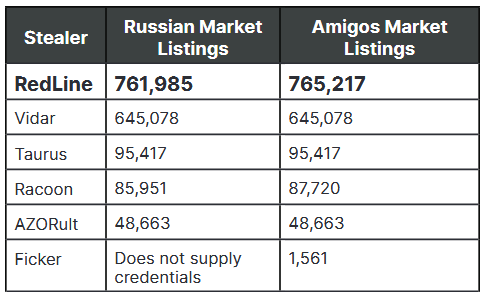
The Insikt Group experts’ conclusions echo a similar KELA report dated February 2020. Then the researchers found that about 90% of the stolen credentials on the Genesis Market were obtained as a result of attacks by the AZORult info-stealer.
These findings suggest that underground marketplaces are highly fragmented and usually work with their own specific vendors. Likewise, legitimate marketplaces have their own preferences in choosing business partners.
Tugoti ko nga pahinumdoman ka nga kami usab ang nagsulat niana Ang BluStealer malware nangawat sa cryptocurrency ug mikaylap pinaagi sa mga email sa phishing.